When Vata Carries Us Away from Our Centre – Autumn, Vata & Sleep
October 5, 2026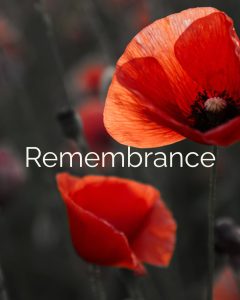
Right Remembrance - Remembering What Truly Matters
As we move further into November, a season of drawing inward, remembering and reflecting, I find myself contemplating the deeper meaning of remembrance.
As I thought about this today, I realised that I have been immersed in practices of remembrance for much of the season, each month offering a different perspective on what it means to remember, and perhaps more importantly, what it is that we are being invited to remember.
In September, I spent time observing Pitru Paksha, the period in the Vedic calendar traditionally dedicated to honouring and remembering our ancestors. Through daily Vedic rituals and offerings, we acknowledge those who have gone before us, recognising the lives, sacrifices and blessings that have contributed to our own existence.
Not long afterwards, we found ourselves in Cyprus for Navaratri, the nine nights dedicated to the Divine Feminine. Here, our daily practice invited us to remember the movement of the Divine Mother in the world, the creative force from which all life emerges according to the Yoga and Vedic tradition. In Yoga and Ayurveda, we might understand this as Shakti, the dynamic life force permeating all creation, with Prakriti representing the underlying intelligence and creative nature of existence.
There was something deeply healing about this daily remembrance whilst we were in Cyprus. It brought us back to what really matters, beyond the distractions and preoccupations of everyday life, and towards that which is enduring, benevolent and always present.
On our return, I celebrated Samhain with a lovely group at our autumn day retreat. Traditionally, this is a time in our own ancestral culture for remembering those who have passed, acknowledging our lineage and contemplating the relationship between the material and immaterial worlds. The thinning of the veil between these worlds, as the old traditions describe it, offers an invitation to become still, listen and perhaps receive something of the wisdom of those who have gone before us.
And now, just a week later, we arrive at Remembrance Sunday and Armistice Day, when we collectively pause to remember those who have lost their lives in conflict, and the sacrifices made by generations before us.
This is always an emotional time for me, particularly when I think of my paternal grandmother.
She was a Birmingham woman who lost her own mother at an early age. As the eldest child, she was left to help raise her twelve younger siblings, all of whom were boys apart from one sister. Tragically, I believe she lost all but two of her brothers in the wars.
One of those lost was Ted. He was sent to Burma. By all accounts, he was her favourite, and I think perhaps the youngest. One day she received the devastating news that he had been killed. Then came a second letter saying that he was safe, followed by a third confirming that, no, he had indeed been killed.
I cannot begin to imagine what she went through.
As a child, I had little understanding of what my grandparents had lived through. My grandfather had served in the cavalry in India, coincidentally in Pune, a place where I would later spend considerable time in my spiritual explorations.
How much of our family history remains quietly held within us, often without our even knowing it? How many lives, experiences, sacrifices, losses and acts of love have contributed to the person we are today?
Over these past weeks, I have found myself coming home to something within myself through this remembrance. Not simply remembering individual people or historical events, but recognising our place within a much greater unfolding of life.
There is a beautiful Sanskrit word, Smriti which means memory, recollection or remembrance. It comes from the root smṛ, meaning to remember.
Within the traditions of Yoga and Vedanta, remembrance can be explored as something much deeper than simply recalling events or experiences. It can also be understood as bringing back into conscious awareness that which has become obscured or forgotten.
In Patanjali’s Yoga Sutras, memory is described as the retention of experiences. Our experiences leave impressions within the mind, known as saṃskāras, which influence how we perceive the world and how we respond to life.
Some memories nourish us; others may keep us caught in old patterns of fear, grief, resentment or attachment. The practice of Yoga invites us to develop discernment, becoming increasingly conscious of what we hold on to, what we cultivate within ourselves and what we allow to guide our lives.
Perhaps, then, we might explore right remembrance as a conscious practice: remembering what is life-affirming, what is essential and what we wish to keep alive through the way we live.
This does not mean suppressing painful memories or idealising our past. Our ancestral histories, like our personal histories, may contain suffering, injustice and difficult relationships. We do not have to perpetuate what has caused harm, nor carry everything forward simply because it has been passed down to us.
However, we can consciously choose what we wish to nurture: the love, courage, kindness, generosity and wisdom that have also travelled through the generations.
And perhaps this is where remembrance takes us beyond our individual histories.
In the Bhagavad Gita, Krishna speaks of remembrance, knowledge and forgetfulness arising from the Divine presence within all beings. From the perspective of this Yoga Vedanta tradition, we are invited to recognise our essential nature, the Atman, as something beyond the constantly changing experiences of body and mind.
Our circumstances, relationships and identities are continually changing. Yet beneath this movement is the invitation to recognise that which is changeless: the deeper reality that is never diminished by the passing of time or the changing forms through which life expresses itself.
Perhaps the deepest form of remembrance is remembering that which has never truly been absent: our essential nature, and the life that connects us all.
In Ayurveda and Yoga, we might contemplate this through Shakti, the benevolent creative force permeating all existence. We are not separate from this greater unfolding. We are part of it.
There is something about remembering the fragility and preciousness of human life that can bring us into a much clearer relationship with what really matters.
We are reminded that life is fleeting. We never know when our time will come, or what circumstances we may find ourselves called to meet. Those who died in the wars, many of them barely more than children, would never know old age, the unfolding of their lives or the ordinary joys that so often become the very things we cherish most.
This remembrance over the past months, has somehow left me with a full heart. A sense of gratitude for what is, and for all that has gone before us, both within our own families and within the greater human family.
I find myself wondering how much might change if we could live with the deeper remembrance that Yoga Vedanta teaches us about.
How many conflicts, within ourselves, between families, communities and nations, might be avoided if we could remember our essential interconnectedness? If we could see beyond our immediate grievances, fears and differences, and recognise the preciousness of the life we share?
We are a long way from living this way for the most part and that’s OK, isn’t it? We can only do our best and we can endavour to remember “smriti”. We can aspire. And maybe the best steps forward are to begin with ourselves – with the way we meet ourselves and the way we meet our one another in every day life..
Every act of kindness, every moment of understanding, every time we choose compassion over division, sends a little ripple into the world.
Perhaps this is one of the most meaningful ways we can honour those who have gone before us: not simply by remembering what happened, but by allowing that remembrance to influence how we live now.
To remember what matters. To remember what connects us. To remember the love that sustains us.
And, above all, to remember who we truly are.
This kind of remembrance can be a source of healing and gratitude, and a force for peace, within ourselves and in the world around us.
Let’s pause a little this week for remembrance – to remember all that we have been given, to acknowledge sacrifices made on our behalf, to acknowledge that which never dies, which unites and which dwells in the heart of each one of us and the love and peace that are born from it.
With my love to you all,
Sara Shama
THIS WEEK’S AWARENESS PRACTICE – Right Remembrance
On Wednesday 11 November, at 11am, the nation will observe its two-minute silence.
I invite you to use this collective pause as an opportunity for a little personal contemplation.
As you become still, allow your attention to settle. Begin by remembering those who have lost their lives in war. Bring to mind the individuals, families and generations whose lives were touched by conflict. You may wish to remember someone from your own family, or simply hold in awareness all those whose lives were cut short.
Allow this remembrance to open into gratitude for the lives, freedoms and opportunities that have been made possible through the sacrifices of others.
Then, gently turn your awareness towards the deeper meaning of remembrance.
Beyond the events of history, beyond the changing circumstances of our own lives, what is it that endures?
Can you sense the quiet presence of that which is not diminished by time, that which connects all life and holds us within something greater than ourselves?
Rest for a few moments in this awareness.
You do not need to find an answer. Simply allow yourself to remember.
ENQUIRY PRACTICE – What do we carry forward?
At some point this week, perhaps you might like to take a little time to reflect on your own ancestral heritage and the generations who came before you.
You could begin with these questions:
What do I know of the lives of those who came before me? What might I not know?
What qualities of love, courage, kindness, resilience or wisdom have been passed down through my family?
What have I received that I might wish to carry forward?
Are there patterns of suffering or behaviour that I can acknowledge without needing to perpetuate?
Beyond my individual family history, what connects me to the greater human family and to all of life?
And finally, perhaps sit quietly with this question:
What is it that does not die? What is the essence of love, goodness and life that remains, even as individual lives and forms pass away?
There is no need to force an answer. Let the enquiry itself be the practice.
